
The Story of Coaching
A Chance Encounter
What we think of today as coaching — life coaching, business coaching, executive coaching, etc. — all owes its existence to the evening when Timothy Gallwey, a former tennis prodigy, encountered the young guru Prem Rawat.
Timothy Gallwey was from California. As a boy, he’d been ranked seventh in America and as a student he’d been the captain of the Harvard tennis team. He graduated in 1960 and, passionate about his sport, started building up a practice as a tennis coach.
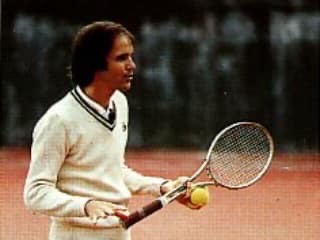
Prem Rawat came from a family whose religious organisation, the Divine Light Mission, operated a little like a family business. When Rawat’s father died in 1966, Rawat took over as the main performer, despite being only 8 years old at the time.

In 1971, the Mission came to America, set up a tax-exempt foundation and began to open up ashrams, publish magazines, and organise reach-out events and festivals. It quickly garnered followers, some who took vows of poverty, celibacy and obedience. When the young guru spoke at Monterey in late 1971, Gallwey was amongst those in the audience and a reporter from the New York Times happened to capture Gallwey’s thoughts.
“I went because he was a 13-year-old from India with six million followers and I wanted to see a saint. When he said, ‘I can show you God,’ I concluded he was either a fraud or a prophet. But what if it were true? I cancelled a day of classes and followed him to L.A.” [1]
Gallwey’s subsequent experience of Rawat convinced him that he was the genuine article — “I could never catch him pretending” — and soon Gallwey was living in an ashram and meditating every day. He spent two months in India and when he returned and began teaching tennis again he saw his students’ experience in a new light. He was now interested in what was going on in their minds as much as he was in what their bodies were doing.
Gallwey’s Big Insight
In the traditional approach to tennis coaching, the coach gives the student instructions for how to move — when to step forwards, for instance, or how to swing a racket to get spin on the ball. But Gallwey now noticed that these instructions encouraged internal chatter in his students’ heads. Their minds would become full of ideas about the proper ways to perform a stroke, or about how much they wanted to succeed, or how difficult a stroke was, or even why the way they currently played was perfectly justifiable.
Gallwey knew from his own days as a top player that the optimum state for both learning and performing was one where the player’s internal chatter falls silent and their attention is given over completely to the concrete details of what is happening that moment.
By filling his students’ heads with ideas, Gallwey realised, he had actually been interfering with their natural ability to perform and learn! The way he had been teaching — the way all tennis coaches taught — was counter-productive!

A New Way to Teach
Gallwey set about developing an alternative approach to coaching tennis, one that drew on people’s natural capacity to learn.
He drew a distinction between tennis’ outer game and its inner game. In the outer game, players have to overcome external obstacles in order to reach external goals. How can they use their arms, legs and racket to achieve the best results? How must the ball be struck to produce a fast serve? Or to volley the ball past an opponent?
The inner game “takes place in the mind of the player” and “is played against such obstacles as lapses in concentration, nervousness, self-doubt, and self-condemnation.”[2] The ultimate goal of this game, Gallwey believed, was the liberation of the player’s full potential.
Players could be helped with their inner games by giving them awareness instructions instead of performance instructions. Rather than telling them how far back to take their racket when serving, for instance, Gallwey would tell them to notice how far back they were taking their racket and shout out a number to represent what they noticed. When they did that, he found, the learning took care of itself.
The Inner Game Takes Off
Gallwey distilled his thinking and methods into a bestselling book, The Inner Game of Tennis.
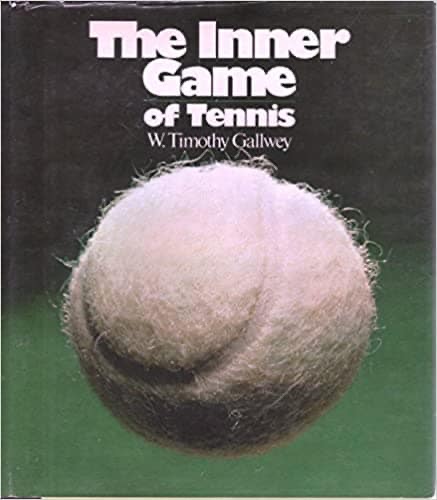
Gallwey believed that in sport, as in meditation, the most important thing was awareness in the moment. “Simply stated, the first principle of the Inner Game approach to learning is that whatever increases the quality of awareness in an individual also increases the quality of learning, performance and enjoyment. Conversely, whatever interferes with or distorts awareness of things as they are detracts from learning, performance and enjoyment.”[3]
But the inner game was always, for Gallwey, about more than just tennis.
“If, while learning tennis, you begin to learn how to focus your attention and how to trust in yourself, you have learned something far more valuable than how to hit a forceful backhand. The backhand can be used to advantage only on a tennis court, but the skill of mastering the art of effortless concentration is invaluable in whatever you set your mind to.”[4]
The Birth of Executive Coaching
Before long Gallwey had attracted an inner circle of followers who helped him apply the inner game approach to skiing and golf.
Many of the people who attended inner game courses were businessmen. When they saw the impact the inner game approach had on their sports performance, many began asking if the inner game could also be applied to their professional life — performance mattered there as well — and a few members of Gallwey’s inner circle took up the challenge.
They knew that the core of the inner game approach was refraining from telling people what to do and, instead, helping them discover for themselves how to perform better. But what did this mean in a business context?
Gallwey’s protégés worked with McKinsey consultants, pilot testing their methods with business clients and videoing some of their sessions. When they reflected on what they did that worked, they noticed that they more or less followed a four-step process. One of McKinsey’s communication specialists came up with the GROW acronym to label the steps — G, for Goal (they assumed that all coachees already know what it is they want to achieve); R, for Reality (taking stock of the main factors to consider); O, for Options (exploring how the coachee might achieve their goals); and W, for Way Forward (the set of actions the coachee would take).
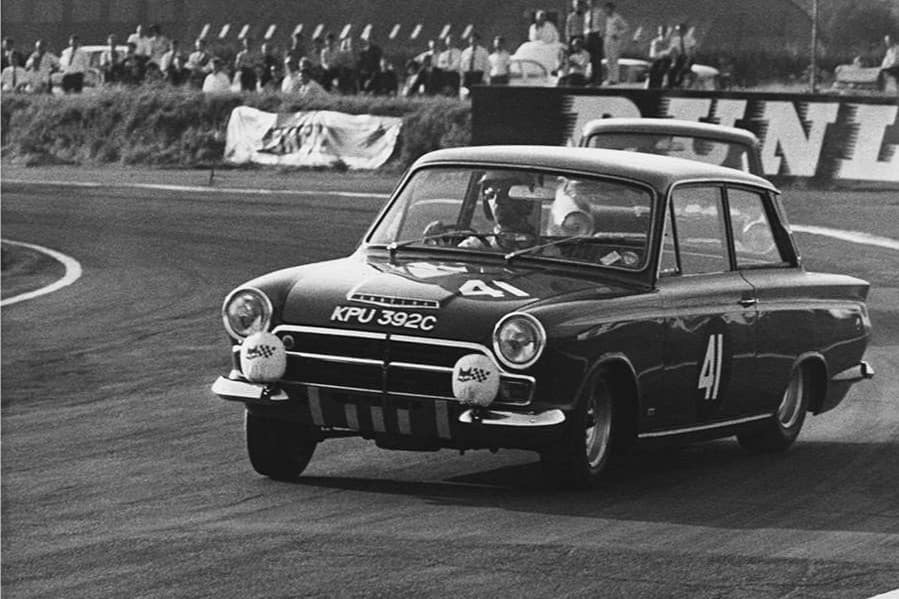
One of Gallwey’s protégés was John Whitmore, an ex-European touring car champion. He’d been educated at Eton and Sandhurst, so he had excellent contacts in the business world. He found that there was a genuine appetite for what his team had been developing, but the phrase ‘inner game’ was a barrier, at least in England. People thought it had the ring of an American cult about it.
The term ‘coaching’ went down much better, with its connotations of professional performance-improvement. So now, whenever the inner game approach is applied beyond the bounds of sport, it is simply called ‘coaching’.
Coaching Catches On
In the early 1990s, executive coaching became established as a legitimate practice and John Whitmore published the first book on coaching.[ref]
In the mid-1990s, several organisations set themselves up as professional coaching bodies with the aims of promoting coaching within organisations and establishing professional standards. They validate coach training courses by checking that the courses cover a suitable list of competencies and they offer accreditation to any coach who has trained using an approved course and who is willing to pay their fees. (The ICF currently charge $245 per year.)
As the ‘coaching’ label gained recognition, coaches found an ever-expanding set of niches to work in. Soon there was not just executive coaching, but life coaching too … and career coaching, health coaching, financial coaching, relationship coaching and any other speciality that
As coaching boomed, lots of people whose way of working wasn’t grounded in Gallwey’s thinking started calling themselves coaches, many with little to offer but a vague belief in human potential or in the power of a ‘success mindset’.
Meanwhile, during the 2000s and 2010s, most large companies started making use of some version of business coaching, for they found that it worked. The improvements in performance and staff wellbeing merited the investment.
By the end of the 2010s, the coaching industry had become well established. Business coaching in the USA alone was an industry worth $11b.[ref] And now, in the mid-2020s, coaching seems to be everywhere. Most big companies have coaching programmes for their senior staff. Coaches with all sorts of specialities, from nutrition to dealing with stress, advertise themselves on Instagram and TikTok. There is a huge needs for what coaching can offer.
Not everything that goes by the name of coaching is able to meet that need well. There’s a lot of nonsense spoken about coaching and even ICF courses haven’t progressed much beyond the understanding of coaching John Whitmore gave to the world nearly 40 years ago. But Coachwise’s courses make use of a mechanism-level understanding of the coaching process. Much is possible.
Perhaps we will soon enter and era where everybody everywhere has access to effective coaching and where this coaching helps people live the kind of lives that, deep down, they most want to live.